
It is common knowledge that sunlight is an important energy source for plants. This is because it is crucial in the process of photosynthesis which yields glucose. This does not imply that plants become quiescent at night.
IN THIS ARTICLE
Do Plants Grow At Night?
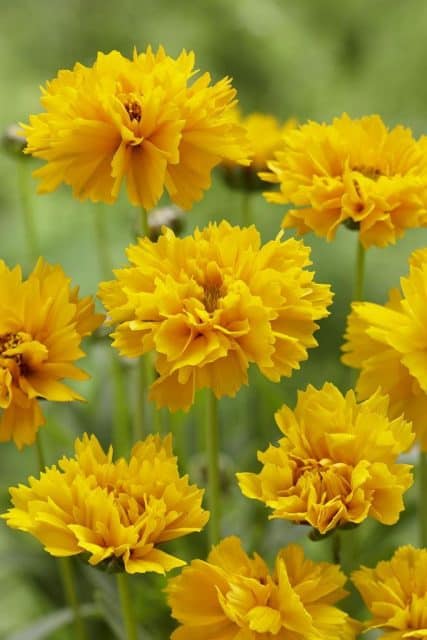
Coreopsis grandiflora Early Sunrise – Garden Plants
Plants are living things that do not sleep. They respire throughout the 24 hours of the day. During respiration, plants store oxygen and glucose to produce carbohydrates which play an important role in their growth.
Also, sunlight is not required for this. Hence, it is simply a myth that plants can only grow during the daytime. They continue to grow at night as well. This is when plants utilise the energy they manufacture and store in the daytime.
When Do Plants Grow?
The amount of darkness a plant requires to grow is solely dependent on the nature of that plant. On this basis, plants are often classified as long day and short-day plants.
Long day plants need less than twelve hours of darkness to bloom. Plants such as dill, spinach and hibiscus are great examples of long-day plants.
On the other hand, more than twelve hours of darkness for several weeks is vital for short-day plants to thrive. Some good examples are rice, onions, soybeans and sugarcane. Some plants are neutral and are not affected by the length of the day.
What happens to plants at night?
Within the cells of plants are organelles known as chloroplasts. They are activated when sunlight makes contact with the leaves. These chloroplasts contain chlorophyll which is a green pigment responsible for absorbing sunlight to provide energy for photosynthesis.
Chloroplasts stop the process of photosynthesis at night causing them to shrink. During this time, plants continue to respire by converting stored nutrients into energy for growth and other biological functions.
It is believed that plants tend to grow faster at night. This is because plants contain cytoplasmic pigments known as phytochromes. These pigments detect darkness, stimulating the production of growth hormones. This will cause the plant to elongate its shaded part in search of light. This is an integral part of plant survival.
Furthermore, flowers and buds have a major role in reproduction which is carried out by pollinators that are active in the daytime. This means that the process is shut down at night. Since these parts of a plant do not directly influence the plant’s growth and respiration, its growth remains unaffected at night.
