
Caryopteris ‘Stephi’ is a marvellous, new, and unique variety of the Caryopteris genus, often described as it is a bushy and compact deciduous shrub. It was previously often grouped under the Verbenaceae family but is now placed in the Lamiaceae family as an ornamental plant and is also known as Bluebeard ‘Stephi’ or Blue mist shrub ‘Stephi’.
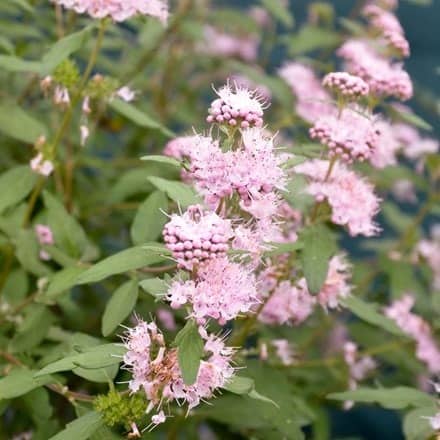
Caryopteris × clandonensis Stephi (‘Lisstep’) PBR)
Caryopteris stephi was created as an accidental cross between Caryopteris incana and Caryopteris mongholica by Arthur Simmonds at Clandon in Surrey, England.
IN THIS ARTICLE
How big does Caryopteris x clandonensis ‘Stephi’ get?
This flowering plant is a dwarf shrub and will not get big. It will only reach a mature height and spread of 90 centimetres.
What does Caryopteris x clandonensis ‘Stephi’ look like?
‘Stephi’ has narrow and oval to lance-shaped, greyish-green leaves with a silvery underside. The leaves are also slightly aromatic with clusters of pale pink, fragrant flowers on upright stems that bloom in late summer and are attractive to pollinators like butterflies.
How do you grow Caryopteris stephi?
Sow your plant in fertile and moist, free-draining, loamy, sandy, or chalky soil with a pH that is between 5 and 8. Take note that this shrub will not tolerate waterlogged soil that drains poorly.
Where should I position Bluebeard ‘Stephi’ in my garden?
Plant your shrub in a south or west-facing, the sheltered position of your garden where it will receive full sunlight. Too much shade will reduce the flowering potential of your plant.
How can I propagate Caryopteris stephi?
Bluebeard ‘stephi’ can be propagated from seeds, softwood, semi-ripe and hardwood cuttings from spring to the middle of winter. It is also protected by Plant Breeders’ Rights.
How do I care for my Caryopteris stephi?
Watering: Watering your plant regularly when it is still young and during the dry season will keep it healthy.
Fertilisation: Mixing organic material or compost into your planting soil is the best way to feed your plant as this particular shrub does not need chemical fertilisers.
Pruning: Your shrub can be pruned back hard in spring to keep them in shape and to promote new and robust growth.
