
 |
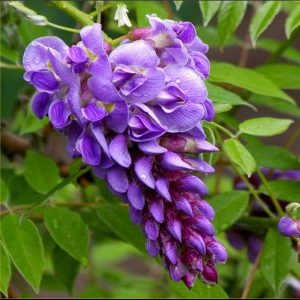
There are many Asian varieties of wisteria – we could spend all day talking about them. But here, we’re going to be talking about one variety that’s easier to control and less vigorous – Amethyst Falls wisteria also referred to as Dwarf wisteria.
Regardless of how easy it is to grow; dwarf wisteria is actually an early bloomer – it produces flowers just about a year after you plant it. Also, its vines are covered in lavender-coloured flowers – during spring, these flowers walk their way down the branches of the plant. If you want something a bit more showy, try Wisteria Sinensis Alba
One more thing, this plant also produces smaller flowers and leaves compared to other wisteria varieties. Even more, it grows up to 20 feet.
IN THIS ARTICLE
How to grow Dwarf Wisteria
To grow dwarf wisteria properly, you need moist but well-drained soil – preferably against a sturdy wall like the front of your house. Also, you can plant it so it faces the west or south.
You should also prune your plant in February, then once again in August. Also, to encourage more flowers, make sure you feed it with a fertiliser that’s high in potash.
Where should I position Dwarf Wisteria in my garden?
Like we mentioned earlier, you can grow your dwarf wisteria against a sturdy house wall or any structure – a sturdy pergola for instance.
You can also grow your plant in a pot – this is only if you’re growing it as a tree. In this case, you need to prune it regularly so it maintains its form – planting it as a standard tree is a high-maintenance option.
What kind of soil does Dwarf Wisteria need?
If you want your dwarf wisteria to thrive, plant it in well-drained, fertile soil. To improve drainage, you can add sand to clay soil.
Also, you want to mix manure or compost into the soil before you plant your dwarf wisteria – this improves the health of the vines as well as soil fertility.
How To Prune Dwarf Wisteria
Prune your dwarf wisteria twice a year – once in midsummer and once when it’s late winter. Also, once it’s the end of the spring-summer blooming period, you should cut back the growth from that year to around six leaves from the plant’s branch – this helps control the shape of the vines.
Where to buy Dwarf Wisteria or find for sale in the UK
Have a look here at this UK supplier
