
Tree Ferns – Dicksonia Antarctica
Tree ferns, primarily Dicksonia Antarctica were my first ‘big’ buy for my garden a few years ago, having longed for those luscious fronds for a while previously.
I jumped into the deep end and bought 2x 6ft tree ferns that were for sale at an online nursery, planted them in the ground, changed my mind on position and re-sited them a few months later.
A few years on I can still say they are one of my favourite plants in the garden, and endlessly impressive, and together with the Musa Basjoo always are a talking point when friends and family come and visit the garden.
There are at least twelve thousand species of fern, many of which can be found in tropical and subtropical regions of the world on virtually every continent, hence there are a large number that can be grown to perfection in our temperate gardens

Tree Fern (Dicksonia antarctica) l- 3 foot
Ferns in general, are luxuriant and predominantly green making them perfect plants for shady corners of the exotic garden underneath the canopy of larger trees shrubs and tree ferns. MORE: About Ground Ferns / Types
Dicksonia Antarctica for Structural Backbone
A must buy staple for the UK tropical garden. These giants of the fern world add a truly exotic feel to the garden with their superficially palm like fronds, giving strong shape and stately form to tranquil areas of the garden. READ: What to grow with tree ferns?
They also have a very alluring primitive appearance, as these giants of the fern world were around at the time of the dinosaurs long before flowering plants existed.

Dicksonia antartica tree fern
They are native to the tropics and subtropical parts of the Southern Hemisphere, though several grow well in our cool maritime climate if sited well
A suitable hardy Tree fern for UK gardens?
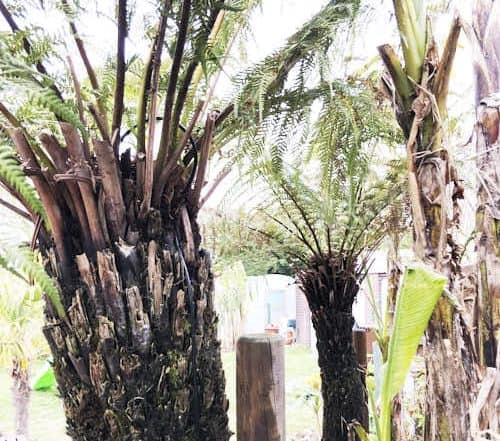
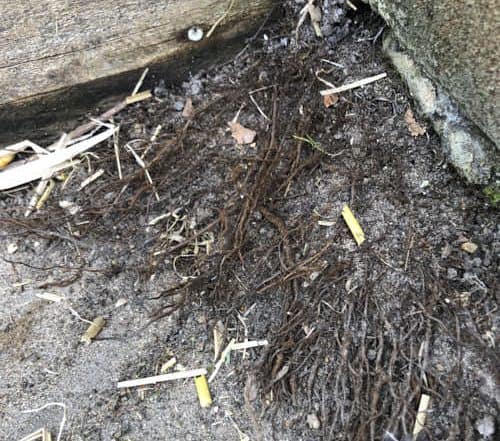
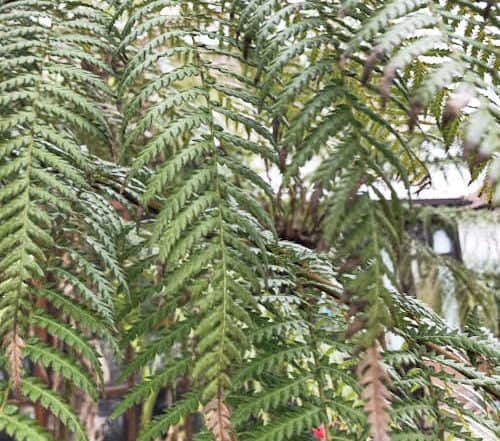
It is an exotic ever green tree fern. It is considered as one of the oldest plants in the world, native to Australia and New Zealand. Its erect trunk consists of thick mass of fibrous roots from which thick long (up to 3m/10ft.) fronds originate. The pinnation of fronds at the top adds to the beauty of tree as it presents an attractive and symmetrical arrangement. This tree gives a very fancy and dramatic look to the whole garden or whichever space it is placed in. I love to underplant tree ferns with lower growing ferns
The rate at which Dicksonia antarctica grows is very slow. Therefore, the trunk can take up to ten years to grow 30cm only. The lush green fronds, however, grow at a much faster pace. The deciduous nature of this plant is a concern of fern growers. The soft fern can bear a temperature of -10 degrees Celsius for a short period. The foliage dies at -2 degrees C, but quickly grows back as soon as the weather becomes less adverse, so it’s not a concern. It’s the top part which is vulnerable to have irreparable damage because of prolonged winter freezing. Because of the half-hardy or tender hardiness of the crown, it needs extra care in winter. Crown can be preserved by wrapping it with straw, horticultural fleece or dead fallen fronds, or placing it in a greenhouse. In mild winter, fern may not need any protection at all.
Dicksonia antarctica thrives well in dappled partial, partial or full shade. It should be planted in humus rich, neutral to acid soil. Experts say that it should ideally be planted somewhere where it can access continuous water supply, we use auto drippers here! It should never be planted in dry soil under full sun. Fronds may not grow in their full capacity if fern is not watered properly.
It can be used a standalone piece of ornament or can be combined with ferns or other plants. Fatsia japonica, Asplenium scolopendrium and Matteuccia struthiopteris grow well with Dicksonia Antarctica.
Do not worry if the trunk you receive from suppliers does not has fronds, as these grow back quickly.
I’m sure you are familiar with green, large, opulent looking fronds on long forest roads and bush walks. Those fronds that you see are from Tree Ferns such as Dicksonia Antarctica. Tree ferns are exotic fern plants native to the coastal regions of Eastern Australia. They are regarded as one of the oldest plants on Earth, dating back millions of years, even before the era of dinosaurs. These beautiful tree ferns create a dramatic tropical environment in the gentle forests of Australia and any other landscape or garden they are grown in.
Although these trees have single tree-trunk like stems, they are not scientifically regarded as trees because they do not possess the woody plant stem and do not undergo secondary plant growth. Rather, the single stem is an over enlarged rhizome.
Tree ferns for sale UK
 Encyclopedia of Exotic Plants for Temperate Climates - Will Giles
What are Tree Ferns?
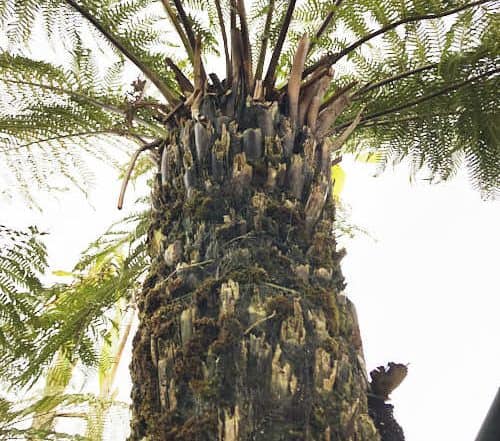
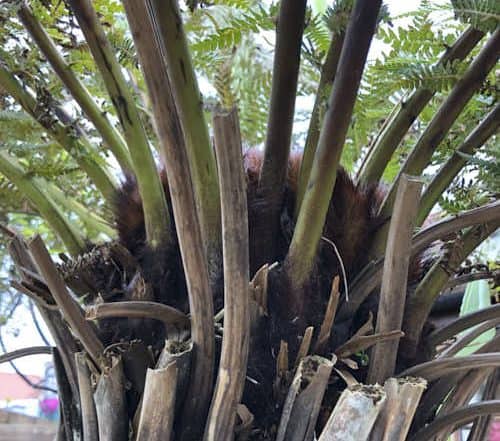
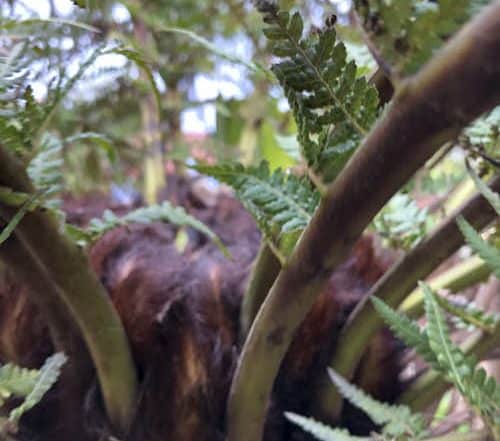
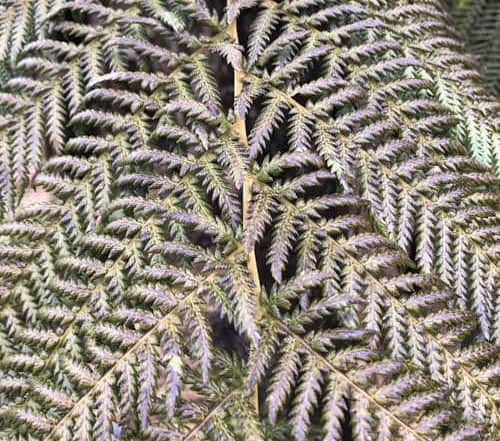
Tree ferns feature a single erect tree trunk that is thick and soft, of a wool-like fibre. At the top of this trunk sits a series of beautiful, green, and wide fern fronds that creates a luxurious canopy in the landscape. Just like other plants in the fern family, tree ferns are not flowering plants and do not produce seeds. Rather they reproduce from offsets of the plant or from the spores that grow on the underside of the fern fronds.
They are generally regarded as a slow-growing plant, achieving annual growth of only 25-50 millimetres in height. Although, they are likely to grow faster in the right environment and their natural forest habitat. Hence, it is difficult to tell the age of a Dicksonia Antarctica tree by just sighting it. Trees that you spot in an old and developed forest might be several centuries old.
Tree ferns are assumed to attain a total lifetime height of 15 feet when cultivated and 20 feet in their natural habitat. However, because of the lifespan and age of these trees, they may grow even taller than this. The dark green fronds of tree ferns have a rough texture and are usually 6 feet to 19 feet in diameter, but this ranges depending on the size of a tree and how it is cultivated.
Tree ferns are evergreen plants. That is, they stay green all year round as long as they get proper care during the harsh winter season.
Species of Tree Ferns – Types and Varieties of Tree ferns
The two most common tree ferns are native to southeastern Australia and have a wide distribution across that area. They look alike and those who are not learned about tree ferns are unaware that they are a different species. Plus, they grow close together in the same regions along coastal lines.
The most noticeable differences between the two species are the structure of their fronds and the texture of their stems.
The two species are Cyathea australis and Dicksonia antarctica.
Cyathea australis tree fern
This is commonly called rough tree fern because of the presence of masses of hair-like scale, knobbly bits, and the adventitious roots found on its trunk. Apart from its beautiful fern fronds, another great feature of this species is its hardy nature. It can survive in the harshest of weather and easily adapts to different weather conditions and soil types that is why it can thrive on dry slopes unlike some other species of ferns.
Dicksonia antarctica
As mentioned above, these are terrestrial ferns with a singular enlarged rhizome that acts as the trunk. Dicksonia antarctica thrives in areas with high water content and lots of moisture that is why it is usually seen in wet forests, in gullies, and around creek beds. Its dark green ferns grow in a wide-spreading canopy style. It is relatively easy to grow and can be grown from spores or plantlets that spring out at the base of the rhizome. Another alternative to growing the plant is by the cutting method, although this is not recommended except in a situation where the fern will die in its present position if it is not relocated.
- Encyclopedia of Exotic Plants for Temperate Climates - Will Giles
Dicksonia antarctica is a beautiful indoor and outdoor plant that is relatively easy to grow. When cultivating it, plant it in loose soil, keep the base moist, and supply it with lots of nutrients.
How To Plant Dicksonia antarctica
Dicksonia antarctica is easily adaptable and can grow in any type of soil. It is easy to grow once it has lots of water and sufficient organic nutrients.
Regardless of whether you’re planting directly into the ground or a container, dig a hole larger than the trunk width and mix in lots of nutrient rich soil and compost.
- Make sure you are using soil that is well-draining and mix in 5-10 gallons of compost to the soil.
- Place the trunk into the hole (generally we stake ours and place trunk on surface, or a couple of inches into the ground, and eventually the roots will grow down into the ground.
- Fill the hole up with the soil and compost mixture to completely cover it. Gently stamp on it and water thoroughly.
Tree Fern Maintenance
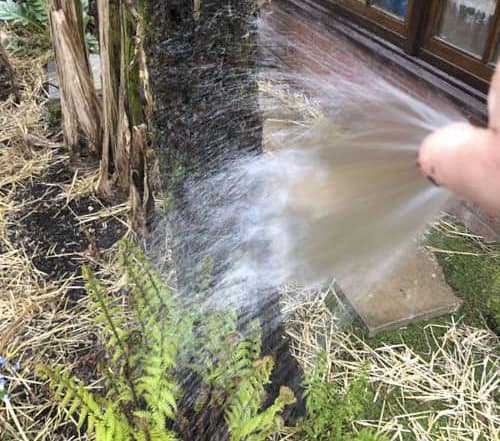
Just like other species of ferns, the Dicksonia Antarctica is low-maintenance and doesn’t require an extensive amount of attention. During harsh weather, the fronds dry up and fall off but experts recommend leaving the dry and brown fronds to fall off on their own because when they fall, they protect the base and trunk of the tree from cold and chilly temperatures and dehydration. We use auto drippers on ours so the trunk always stays damp.
Symbiotic Relationship With Other Plants
The canopy that the fronds of Dicksonia Antarctica produce serve as a shade for other smaller ferns plants and specimen to germinate. In essence, their rhizome stems serve as a mini-ecosystem with mosses, lichens and seedlings growing on it.
Eventually, the tree fern might be totally engulfed by the ecosystem of plants growing on its stem but this usually takes hundreds of years and even after, you will still be able to see the tree stem in the midst of it.
The Dicksonia Antarctica tree fern is an exotic plant and although its natural habitat in Australia, it is now readily available for purchase in horticultural stores. The population has been greatly affected by sellers of these plants so if you want to add this luxurious plant to add to the aesthetics of your garden, make sure you obtain it from a reputable source.
Large tree ferns for sale UK
There should be links to both small and large tree ferns for sale in the UK, so hopefully there will be something the perfect size for your own garden. As expensive as they are, don’t skimp as you won’t get much growth as they are super slow, so get as big as you can afford!
Mature tree ferns for sale uk
To be honest pretty much all the tree ferns you’ll see listed on any site are mature tree ferns, as they are so slow growing even a 1ft tree fern will be a mature ten years old already!
Tree fern FAQ
What are the types of tree ferns?
The two types of tree ferns in the Dicksoniaceae family are Dicksonia antarctica and Dicksonia fibrosa
How do I feed a tree fern?
It is recommended that you used a liquid feed.
Do I need to wrap my tree fern in the UK?
It is okay to leave them, but if you must wrap them up then straw in the crown.
Do tree ferns prefer sun or shade?
Tree ferns like light, but they can burn in direct sunlight. They are happiest under a light canopy of other trees. If you have a sheltered spot in a courtyard that gets some filtered light, that’s perfect. They’ll also handle shade well.
Are tree ferns Hardy?
They are not fully hardy so make sure to give them a warm, sheltered spot. Since tree ferns need to be kept frost-free during winter, they are best planted in containers that can be moved indoors.
Which is the hardiest tree fern?
Dicksonia antarctica – one of the hardier tree ferns.
Can tree ferns grow in full sun?
In general, ferns prefer to grow in part shade, under the canopy of trees
How fast does a tree fern grow?
They are a very slow-growing plant and grow only about 1″ a year.
Do ferns come back every year?
Ferns are perennial plants, those that live for many years. Annual plants are the ones you have to replant every year.
Further Reading & Common Tree Fern Questions
- What should I plant with tree ferns?
- How do you propagate tree ferns?
- Can tree ferns like Dicksonia Antartica grow in pots?
- How can I make my ferns grow bigger?
- How fast does a tree fern grow?
- How long does it take for tree fern fronds to grow?
- Are tree ferns invasive?
- Are tree ferns expensive?
- Does a tree fern have roots?
- Can you grow a tree fern indoors?
- Are tree ferns deciduous?
- How long does a tree fern live?
- Do tree ferns prefer sun or shade?
- How do you cut back tree ferns?
- Are tree ferns hardy?
- How do you take care of a tree fern?
FAQ Tree Ferns – Learn, Buy & Grow with us.








Buy Ferns online – Our selection of Tree ferns for sale
All other Ferns
- Encyclopedia of Exotic Plants for Temperate Climates - Will Giles

Dryopteris Affinis “Cristata”
Dryopteris Affinis “Cristata” also known as Wooded fern or Cristata the King is a semi-evergreen fern that keeps its leaves for most seasons. It is a handsome male fern commonly found in woodland and other wetter parts of the UK. This beautiful fern has a clump-forming habit that grows a badge of narrow and oblong-shaped bipinnate fronds with fronds of 20 pairs of short-stemmed leaflets. The fronds emerge in the spring as golden-green and retain a healthy bright summer throughout summer. By autumn, after the growing season, the colour begins to fade and some fronds will die off during winter or before the next growing season. Cristata has sterile and fertile fronds occurring on the same plant. You can easily identify the fertile fronds by the wide-spaced leaflets that are held at an angle to create space for the production of spores that line the bottom of the leaves in an irregular pattern. These brown, kidney-shaped spores are used for the reproduction and cultivation of the plant. On the other hand, the sterile fronds are the evergreen fronds that are blueish-green and arching.Grow And Caring For Dryopteris Affinis “Cristata”
Dryopteris Affinis is a hardy plant that is easy to cultivate and care for as long as it is given the right conditions. It is not a fussy plant but you need to pay attention to its needs and care for it in its first growing season before it is properly established. Relatively, it is a small and fast-growing plant that can reach its ultimate height of 1 to 2 feet in height and 9 to 23 inches in diameter in a decade or less. Let’s get to the simple growing conditions that you need to keep your Cristata fern plant healthy. Asplenium scolopendrium - Hart’s-tongue fern. A very tropical looking evergreen fern native to Europe and the UK. It might be common but it is never-the-less very attractive, looking as though it should be growing on the floor of a jungle! It grows from 45-60cm tall with a similar width. It has multiple shuttlecock-like crowns composed of strap-like, leathery and very glossy bright green fronds up to 60cm long that are heart-shaped at the base, often with wavy margins on short stems. There are various cultivars available such as ‘Angustifolium’ which has fronds much narrower than the species. ‘Crispum’ has mid-green fronds with strongly wavy margins. ‘Crispum Bolton’s Nobile’ has broad fronds up to 45cm long. ‘Crispum Speciosum’ has sharply tapering fronds, occasionally with yellowish stripes. ‘Cristatum’ has much more divided fronds, each ending in a spreading crest. ‘Furcatum’ has lance-shaped fronds with a variable degree of undulation to the margins, with tips much divided and subdivided. ‘Muricatum’ has fronds distinctly wrinkled, puckered, and pleate They all prefer humus-rich, moist, well-drained alkali to neutral soils but will take slightly acidic soils. Most will take dry conditions for short periods only. Buy Asplenium scolopendrium online - Commonly known as Hart’s-tongue fern
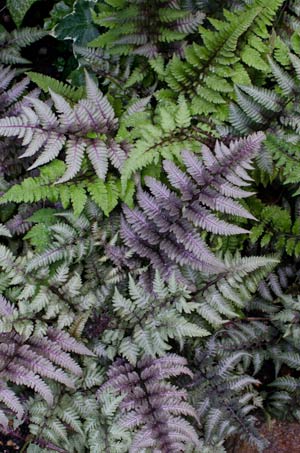 Athyrium niponicum var. pictum - Japanese painted fern - A very attractive deciduous fern from eastern Asia, growing from 25-35cm tall by 50-60cm wide, with short creeping reddish brown rhizomes. The fronds are pinnate, lance-shaped and arching, with silvery grey-green or mid-green tones up to 35cm long with with very prominent redish-purple midribs and yellowish stems. The variety pictum (Japanese painted fern) is truly stunning, one of the showiest ferns for the exotic garden, electrifying shady areas with its fronds 30-38cm long in a soft shade of metallic silver-grey with hints of red and blue. The variety pictum ‘Ursula’s Red’ has superb red-pink and silver fronds developing a blackish red central stripe as they mature. ‘Pictum Crested’ (painted lady fern) has purplish red midribs suffusing into silvery grey with bluish green lamina and crested pinnae—another excellent form. Common Name: Japanese painted fern Latin Name: Athyrium niponicum var. pictum Tenderness Rating: Hardy Ease of growing: Easy Position: Dappled to full shade Soil Condition: Fertile moist soil
 Dicksonia squarrosa online or Hard tree fern or even the Rough tree fern Wheki - A Suckering tree fern with a delicate appearance. Upright stem produces side crowns up the trunk, as well as underground runners producing side shoots, when mature. Faster growing than other dicksonias, up to a height of 8 m in the wild in its native New Zealand, though much smaller here in the UK as imports which are usually single stemmed. The trunk is covered in brown hairs and persistent frond bases. On mature plants the fronds can be from 1-3m long, though more like 0.5-0.8m here. The fronds are lance-shaped, bipinnate to pinnatifid, dark green and glaucous green underneath, with frond stalks covered in dense brown to black hairs. Dicksonia squarrosa prefers humus-rich, well-drained, moist soil in a humid, sheltered location, with plenty of water in the growing season. Never let the trunk dry out! Hardy to about –5°C for short periods, lower with protection. Excellent in containers or as a conservatory plant. = Latin Name: Dicksonia squarrosa Common Names: Hard tree fern, Rough tree fern, Wheki Tenderness Rating: Frost-hardy if well wrapped in cold weather Ease of growing: Easy Position: Part or full shade Soil Condition: Humus-rich, well-drained, moist soil Buy Dicksonia squarrosa online | Hard tree fern, Rough tree fern, Wheki
 Blechnum spicant - Hard Fern As they age the feathery dark green fronds of this evergreen 'hard fern' spread semi-horizontally to form an attractive rosette-like shape. One of our recommended varieties it provides all-year foliage interest for shady areas of the garden with moist humus-rich acid soil and companionship for shade-loving woodland plants. It is also known as the Ladder Fern thanks to the arrangement of the leaves.
Polystichum aculeatum - Hard Shield Fern
Lustrous long dark green fronds forming a distinctive shuttlecock-like shape. This hard shield fern is reliably evergreen even in cold areas. Perfect for providing all-year interest for a shady well-drained mixed border the finely divided foliage looks wonderful frosted in the winter garden.
Dryopteris filix-mas 'Male Fern'
Dryopteris filix-mas although defined as deciduous by the RHS has performed like a semi-evergreen fern over winter holding onto the fronds and remaining green throughout winter. This is a traditional looking fern and when mature can reach over a metre in height. This really is one of the larger ground ferns so make sure you plant it with enough room to grow or it will smother anything growing round it. This deciduous fern forms a large clump of narrow lance-shaped green leaves with slightly darker green midribs. Leaves have a delicate appearance and look stunning planted among contrasting bold foliage plants. This fern does best in shade and moist soil.
Matteuccia struthiopteris - Shuttle Cock / Ostrich Fern
The shuttlecock fern is one of the easiest to identify its fronds making a large striking and unmistakable shape. Although happy in shady humus-rich borders among other plants it looks best grown in groups on its own in dappled shade in woodland rich damp grass or in a shady pond margin. The plant spreads slowly by underground rhizomes and in time builds up large groups on its own. The offsets can be dug up and moved in spring but plants look best left to form colonies. The Royal Horticultural Society has given it its prestigious Award of Garden Merit.
Arachniodes aristata variegata - Evergreen East Indian Holly Fern
The Arachnoides Variegata is a fantastic evergreen fern with brightly coloured fronds. Principally grass-green in colour they are also shaded with gold coloured highlights which makes for an unusual spectacle when planted en-mass or contrasted with other low growing plants such as different coloured Heucheras or indeed other ferns. Perfect to use as a groundcover in large groups under trees and shemi-shaded shrub beds as the eventual height is only around 30cms. Why not create an unusual feature garden bed or planter containing one of these and other contrasting foliage plants. Also known as the Variegated Shield Fern.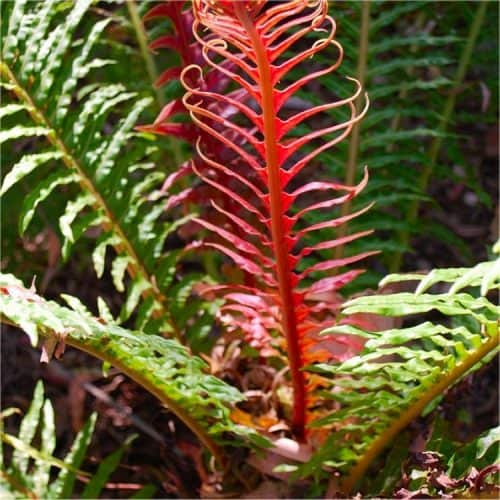
Blechnum brasiliense 'Volcano' - Red Brazilian Tree Fern
A cracking fern which has only just become available here in the UK and is sure to be the next big thing! Blechnum brasiliensis 'Volcano' is an exciting find producing compact plants that lend themselves well to growing in patio planters or in garden beds and borders. The plants throw up large fronds over 2ft long and these unfurl in bright red age to bronze volcanic shades before finally turning to a glossy green - an amazing sight to behold and quite unusual. These fronds are a good size and they form a distinctive shuttlecock shape so it is quite architectural. Over time this fern will form a small trunk hence the name Brazilian Tree Fern. It will thrive in low light which means it can even be used to provide an exotic touch indoors as a house plant. Despite its tropical origins Blechnum brasiliense is hardy enough to be grown in most UK gardens tolerating temperatures down to -5c although it will appreciate a sheltered spot such as being planted in a shaded woody area.
Large Cyathea dealbata - Silver Tree Fern
This Silver Tree fern is the iconic national symbol of New Zealand and one of the most revered tree ferns in the world. Over time this tree-like fern grows a trunk that carries long up to 3m (10ft) mid-to dark green fronds that develop the distinctive silvery backing at maturity. In New Zealand it is found on both the north and south island here in the UK their fascinating appearance will soon catch the heart of any gardener. These impressive tree ferns are one of the oldest plants in the world and will add drama and style to a semi-shady spot and will happily grow in any soil as long as the trunk is kept moist. This Cyathea dealbata tree fern is at the start of it's life and often supplied in an approx 5 litre container with lush green fronds. Perfect to plant and watch develop over the years as it will slowly develop the trunk. Plant out of the way of direct sunlight to avoid scorching and ideally offer some winter protection although this tree fern can reputedly survive British winters down to -8c. It will produce multiple flushes of fronds throughout the year. A real must have for any tree fern collector or as a stand alone specimen.
Growing Tree Ferns in the UK
We bring you another video from our late friend and Exotic gardening expert Will Giles. Here we look into growing one of the most popular exotic plants, the tree fern. A fast growing and beautiful addition to your exotic garden, but requires it’s own special care and attention. Will Giles explores growing these amazing tree ferns in his wonderful garden in Norwich, Norfolk, on the East coast of England.
Further reading
Are tree ferns hardy?
Do you cut back tree fern fronds when they are brown?
How to take care of tree ferns?
Do Tree Ferns Prefer Sun Or Shade?